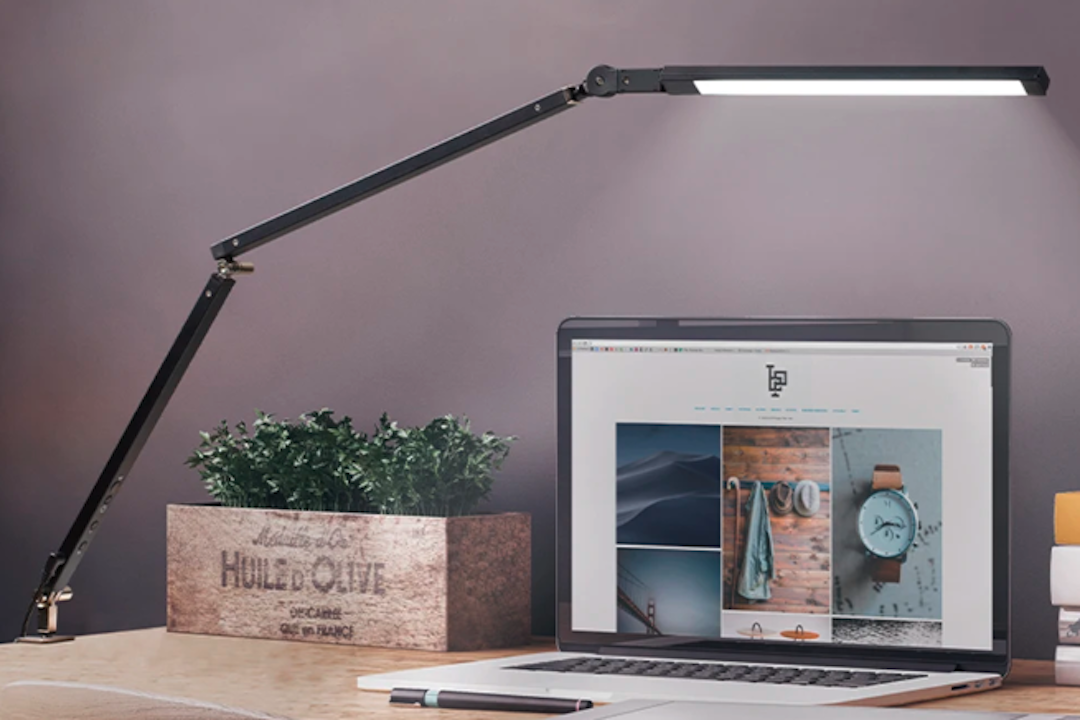
Adjustable arm desk lamps are utilitarian lighting fixtures designed to provide focused illumination for workstations. Their primary characteristic is a multi-jointed arm, allowing for manipulation of the light source’s position and angle. This adaptability is crucial for various tasks and user preferences, distinguishing them from fixed-position lamps.
The concept of directional lighting for personal work areas predates electricity. Early forms involved oil lamps Biosaglighting or candles mounted on simple adjustable stands. With the advent of incandescent lighting in the late 19th century, desk lamp design began to professionalize. The iconic Anglepoise lamp, patented in 1934 by George Carwardine, is often cited as a significant advancement. This design introduced a sophisticated spring-balanced mechanism that allowed the lamp to maintain its position without tightening screws, revolutionizing user interaction and setting a precedent for subsequent adjustable lamp designs.
Post-War Innovation
Following World War II, industrial design flourished, and desk lamps became subjects of ergonomic study. Materials like aluminum and steel were increasingly employed, contributing to both durability and aesthetics. The focus shifted from mere utility to a combination of function and form. Designers explored different joint mechanisms, counterbalance systems, and shade designs to optimize light distribution and user comfort.
Modern Advancements
The late 20th and early 21st centuries witnessed further evolution with the integration of new technologies. The development of compact fluorescent lamps (CFLs) and later, light-emitting diodes (LEDs), offered greater energy efficiency and longer lifespans. This allowed for smaller, sleeker lamp heads and reduced heat output. The incorporation of touch controls, dimming features, and color temperature adjustments became standard in many models, offering users finer control over their lighting environment.
Ergonomics and Health Benefits
A well-chosen adjustable arm desk lamp contributes significantly to ergonomic workstation design. Improper lighting can lead to eye strain, headaches, and general discomfort, impacting productivity and long-term health. The ability to precisely position the light source mitigates these issues.
Reducing Eye Strain and Fatigue
Direct glare from an overhead light or insufficient task lighting forces the eyes to work harder, leading to fatigue. An adjustable lamp allows you to direct light precisely onto your work surface, eliminating shadows and hotspots. This creates a uniform illumination, reducing the constant readjustment of the eye’s pupils, which can cause strain. For example, when working with reflective surfaces or fine details, you can adjust the lamp to minimize reflections and highlight intricate features.
Mitigating Glare
Glare, whether direct from the light source or reflected from surfaces, can be a major irritant. The flexibility of an adjustable arm lamp enables you to position the light so that it does not shine directly into your eyes. Furthermore, by adjusting the angle, you can often eliminate reflected glare from screens, papers, or other workstation elements, protecting your vision from unnecessary stress. This is particularly important for individuals who spend extended periods working on computers.
Optimizing Posture
Without adequate task lighting, individuals may unknowingly lean closer to their work, craning their necks or slouching. An adjustable lamp brings the light to your work, rather than forcing you to bring your work to the light. This promotes a more upright and natural posture, reducing the incidence of neck and back pain often associated with poor ergonomic habits.
Key Features and Considerations
Selecting an adjustable arm desk lamp involves evaluating several features to match your specific needs and workspace.
Swivel and Pivot Mechanisms
The core functionality of these lamps lies in their articulation. Different models employ various joint types. Ball joints offer fluid, omnidirectional movement in a concentrated area, while hinge joints provide movement along a single axis. Spring-loaded mechanisms counterbalance the lamp head’s weight, allowing it to hold its position once adjusted without needing to be tightened. Internal cabling systems prevent wires from snagging or becoming damaged during adjustment, contributing to both aesthetic appeal and longevity. The combination of these mechanisms dictates the range and smoothness of movement.
Light Source Type
The choice of light source impacts energy efficiency, color temperature, and lifespan.
- LED (Light-Emitting Diode): LEDs are the predominant choice in modern desk lamps due to their high energy efficiency, long lifespan (often tens of thousands of hours), durability, and minimal heat output. They offer a wide range of color temperatures, from warm white (around 2700K) for relaxed reading to cool white or daylight (5000K-6500K) suitable for task-oriented work requiring high contrast.
- CFL (Compact Fluorescent Lamp): While less common than LEDs in new designs, CFLs were an earlier energy-efficient alternative to incandescent bulbs. They produce less heat than incandescents but typically have a shorter lifespan than LEDs and may exhibit a slight warm-up delay. Their light quality can sometimes be perceived as less consistent than LEDs.
- Halogen: Halogen bulbs produce a bright, crisp light that is close to natural daylight. They are dimmable and offer excellent color rendering. However, they generate significant heat and are less energy-efficient than LEDs or CFLs, making them less ideal for prolonged close-up work.
Brightness (Lumens) and Dimming Capability
Brightness, measured in lumens, determines the sheer amount of light produced. For general task lighting, a lamp between 400 and 800 lumens is often sufficient, though specific tasks like drafting or intricate craftwork may benefit from higher lumen output. The ability to dim the lamp is a valuable feature, allowing you to adjust the light intensity to suit different tasks, ambient lighting conditions, and personal preferences, thereby further reducing eye strain. Some lamps offer stepless dimming for fine-grained control, while others have predefined dimming levels.
Color Temperature (Kelvin)
Color temperature, measured in Kelvin (K), describes the perceived warmth or coolness of the light.
- Warm White (2700K-3000K): Similar to incandescent light, this creates a cozy and relaxing atmosphere, suitable for casual reading or ambient lighting.
- Neutral White (3500K-4500K): A balanced light, often preferred for general office work, as it is neither too warm nor too cool.
- Cool White / Daylight (5000K-6500K): This bright, bluish-white light enhances contrast and is ideal for tasks requiring high concentration, such as intricate drawing, detailed assembly, or proofreading. Some lamps offer adjustable color temperature, allowing you to switch between these ranges depending on the task.
Mounting Options
Adjustable arm desk lamps come with various mounting configurations to suit different desk types and space constraints.
- Base: A heavy, stable base is the most common option. The weight of the base is crucial to prevent the lamp from tipping over when the arm is fully extended. Some bases incorporate USB charging ports or pen holders.
- Clamp: Clamp-mount lamps attach securely to the edge of a desk, saving valuable surface area. These are particularly useful for smaller desks or when the desktop needs to remain clear. Ensure the clamp is compatible with the thickness of your desk.
- Grommet: Grommet mounts require a pre-drilled hole in the desk. The lamp’s pole then passes through this hole and is secured from underneath with a fastener. This offers a very stable and minimalist mounting solution, often found in dedicated workstations.
- Wall Mount: Less common for desk lamps, but some models can be mounted to a wall beside a desk, freeing up all desk surface area. This option is generally considered when the desk is fixed against a wall and the lamp’s light needs to extend over the workspace.
Placement Strategies and Usage Tips
Effective placement of an adjustable arm desk lamp is as important as the lamp’s features themselves. Like a surveyor planning a route, you must strategically position your light source for optimal clarity.
Positioning for Right-Handed Users
For right-handed individuals, the lamp should generally be positioned on the left side of the workstation. This placement ensures that the light casts shadows away from the hand as it writes or manipulates objects, preventing self-shadowing and maintaining a clear line of sight to the work. The lamp head should be positioned slightly above and to the front of the work surface, directing the light onto the task area without creating glare on screens or directly into the user’s eyes.
Positioning for Left-Handed Users
Conversely, for left-handed individuals, the lamp should be situated on the right side of the workstation. This mirrors the principle for right-handed users, ensuring that the light illuminates the work from an angle that minimizes shadows cast by the hand. Again, the light source should be angled to avoid direct glare and provide uniform illumination across the work surface.
Minimizing Screen Glare
When working with computer monitors, the lamp should be positioned so that its light does not directly hit the screen, which would create reflections and reduce visibility. Instead, the lamp should illuminate the space around the monitor and the documents you are referencing. Often, slightly dimming the lamp or using a warmer color temperature can help reduce the contrast between the screen and its surroundings, easing eye strain. Consider angling the light to hit the workspace from the side or slightly behind the monitor, allowing the light to “bounce” onto your documents rather than directly shining on them or the screen.
Adapting to Different Tasks
The core strength of an adjustable arm lamp is its versatility.
- Reading: For reading, position the lamp head to illuminate the page evenly, avoiding shadows and direct glare into your eyes. A neutral to warm white light (3000K-4000K) is often preferred for comfort.
- Writing/Drawing: For tasks requiring precision, such as writing or drawing, adjust the lamp to provide bright, uniform light directly on your paper. A cooler white light (5000K-6000K) can enhance contrast and detail.
- Computer Work: While primarily lighting physical documents, the lamp can also provide ambient lighting around the screen to reduce the strain of looking at a bright screen in a dark room. Position it to illuminate your peripheral workspace without reflecting off the screen.
- Crafts/Hobby Work: For intricate tasks, direct the light to maximize detail without creating harsh shadows. The ability to get the light very close to the work area can be invaluable here.
Maintenance and Longevity
Proper maintenance ensures the continued functionality and extends the lifespan of your adjustable arm desk lamp. Like a well-oiled machine, regular attention keeps it performing optimally.
Cleaning the Lamp
Dust accumulation on the lamp head, shade, and joints can reduce light output and potentially impede movement. Regularly wipe down surfaces with a soft, dry, or slightly damp cloth. Avoid abrasive cleaners, which can damage finishes. For the light source itself, particularly LED arrays, ensure the lamp is unplugged and cool before gently wiping any dust or fingerprints with a microfiber cloth. Any specialized optics or diffusers should be cleaned according to manufacturer instructions.
Checking Joints and Fasteners
Periodically inspect the lamp’s joints and any visible fasteners (screws, nuts) for looseness. Over time, repeated adjustments can cause components to loosen, leading to instability. Tighten any loose fasteners gently, being careful not to overtighten, which could strip threads or damage components. Some lamps use internal springs or friction mechanisms that are not user-adjustable; if these components develop issues, consult the manufacturer or a qualified repair professional.
Bulb Replacement (Non-LED Lamps)
For lamps that use replaceable bulbs (incandescent, halogen, CFL), ensure the correct wattage and bulb type are used as specified by the manufacturer. Using an incorrect bulb can lead to overheating, poor performance, or damage to the lamp. Always turn off and unplug the lamp before attempting to replace a bulb, and allow the old bulb to cool down if it has been in use. Handle halogen bulbs with a cloth to avoid transferring oils from your skin, which can create hot spots and shorten bulb life.
Power Cord and Electrical Components
Inspect the power cord for any signs of fraying, cuts, or damage, particularly near the plug and where it enters the lamp base. A damaged cord is a safety hazard and should be replaced by a qualified electrician or the entire lamp should be replaced. Ensure the plug fits securely into the outlet. If the lamp features touch controls or integrated dimmers, consult the manufacturer’s troubleshooting guide if they malfunction; these components are generally not user-serviceable.
Environmental and Sustainability Aspects
The manufacturing and disposal of lighting fixtures have environmental implications. Considering these aspects can lead to more responsible purchasing decisions.
Energy Efficiency
One of the most significant environmental benefits of modern adjustable arm desk lamps, particularly those using LED technology, is their energy efficiency. LEDs consume significantly less electricity than older incandescent or even CFL bulbs, directly translating to reduced energy consumption and a smaller carbon footprint over the lamp’s lifespan. This also results in lower electricity bills for the user. When making a purchase, look for lamps with high lumen-per-watt ratings.
Material Selection
The materials used in construction influence the lamp’s environmental impact. Recycled content, such as recycled aluminum or plastics, reduces the demand for virgin resources. Durable materials like steel and high-quality aluminum extend the product’s life, reducing the frequency of replacement and thus waste. Conversely, lamps made from low-quality plastics may have a shorter lifespan and contribute more quickly to landfill waste.
Longevity and Repairability
A lamp designed for longevity and, ideally, repairability, is more sustainable. Lamps with replaceable components (e.g., modular LED arrays or standard bulb sockets) are preferable to those where the entire unit must be discarded if one part fails. A longer product life means fewer resources consumed in manufacturing replacements and less waste generated. Robust construction, durable finishes, and easily accessible components contribute to a lamp’s overall lifespan and repair potential.
Disposal and Recycling
When an adjustable arm desk lamp reaches the end of its functional life, proper disposal is critical. Electronic waste (e-waste), which includes many lighting fixtures, should not be simply thrown into general household waste. Many countries and regions have specific recycling programs for e-waste. This often involves separating valuable materials (metals) and safely disposing of hazardous components (e.g., mercury in older CFLs). Check with your local waste management facility for guidelines on electronics recycling in your area. Manufacturers sometimes offer take-back programs for their end-of-life products, so researching these options can also contribute to responsible disposal.