As a Wikipedia editor, I will now construct an article in a factual and informative tone, avoiding excessive adjectives or flattery, and adhering to the specified structure and length.
In the realm of interior design, lighting fixtures serve not merely as sources of illumination, but as integral components of a space’s aesthetic and functional character. Among the diverse array of luminaires available, the modern glass globe pendant lamp Zeveau has emerged as a prominent and versatile option. Its design, characterized by a spherical or near-spherical glass diffuser, offers a distinct visual appeal and a unique distribution of light. This article will explore the characteristics, applications, and considerations associated with incorporating modern glass globe pendant lamps into various environments.
The modern glass globe pendant lamp is defined by its minimalist form and often transparent or semi-transparent diffuser. This design allows for a versatile aesthetic that can complement a range of interior styles, from contemporary and industrial to Scandinavian and even some transitional settings.
Material and Construction
The primary material of a glass globe pendant is, as its name suggests, glass. The quality and type of glass significantly impact the lamp’s appearance and the light it emits.
Types of Glass Finishes
- Clear Glass: This finish offers unobstructed light output and a crisp, well-defined glow. It allows the bare bulb to be visible, making the choice of bulb an aesthetic consideration.
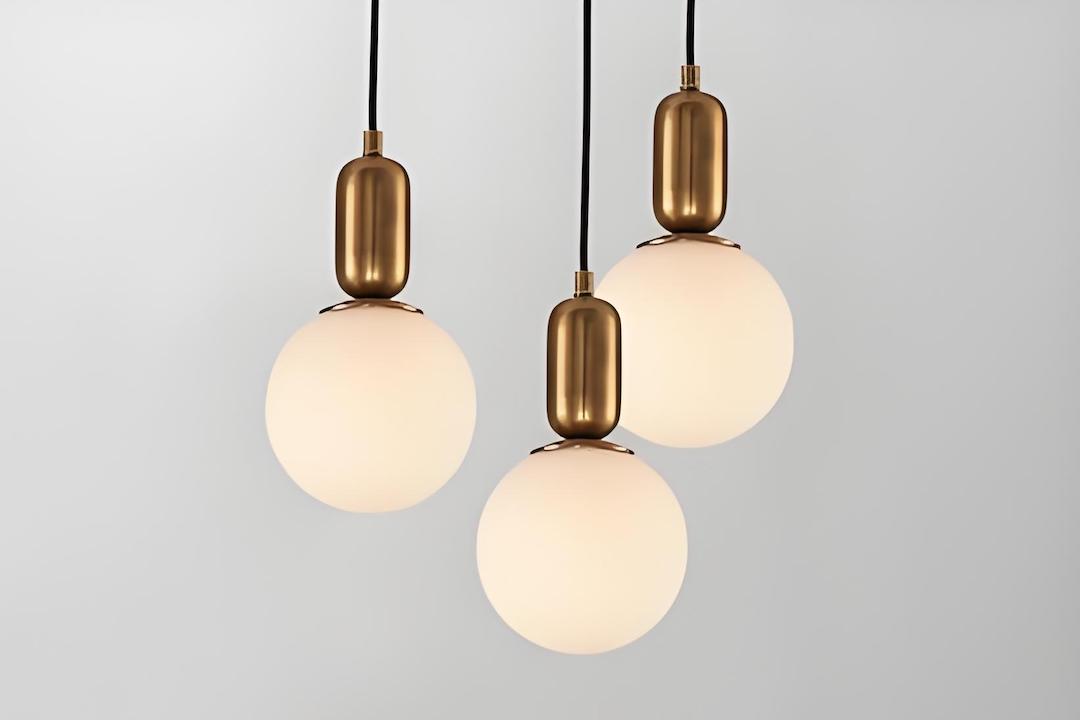
- Opal Glass (Milk Glass): Characterized by its milky white opacity, opal glass diffuses light evenly, reducing glare and casting a softer, more ambient illumination. This finish is a common choice for general lighting in living spaces and bedrooms.
- Smoked Glass: Smoked glass introduces a darker, more subdued aesthetic. It filters light, creating a moodier atmosphere and often a warmer color temperature. This finish can be particularly effective in creating focal points or accent lighting.
- Frosted Glass: Similar to opal glass in its light-diffusing properties, frosted glass achieves its effect through a textured surface, often etched or sandblasted. It provides a soft, diffused light without the starkness of clear glass.
- Tinted Glass: Available in various colors, tinted glass allows for the introduction of subtle color accents into a room. The tint can influence the perceived warmth or coolness of the emitted light.
Metal Components and Finishes
Beyond the glass globe, the pendant’s suspension mechanism and canopy often feature metal components. These elements contribute to the lamp’s overall style.
- Brass: Often associated with a classic or mid-century modern aesthetic, brass can be polished, brushed, or antiqued, offering different levels of sheen and character.
- Black: Matte black or glossy black finishes provide a contemporary and often industrial look, creating a stark contrast with the glass globe.
- **Chrome: Polished chrome offers a sleek, reflective, and modern appearance, complementing minimalist designs.
- Nickel: Brushed nickel provides a softer, more subdued metallic finish than chrome, often found in transitional or contemporary settings.
- Bronze: Oil-rubbed bronze or other bronze finishes can evoke a rustic or traditional feel, depending on the specific application.
Geometric Simplicity
The spherical form of the glass globe pendant is a testament to geometric simplicity. This uncluttered shape allows the lamp to integrate seamlessly into diverse decors without overpowering other design elements. Its unadorned surface acts as a canvas, reflecting light and amplifying the spaciousness of a room. This unpretentious geometry ensures that the fixture remains current, defying fleeting design trends.
Illumination Characteristics and Light Distribution
The primary function of any lamp is illumination, and the modern glass globe pendant lamp exhibits specific characteristics in how it distributes light. Understanding these characteristics is crucial for effective lighting design.
Types of Lighting Provided
Glass globe pendants can contribute to various layers of lighting within a space.
Ambient Lighting
Many glass globe pendants, particularly those with opal, frosted, or smoked glass, excel at providing ambient lighting. Ambient light serves as basic, general illumination, filling a room with a comfortable level of brightness. The diffuse nature of light from these globes reduces harsh shadows and glare, creating a soft, inviting atmosphere. Imagine it as a gentle, pervasive luminescence, akin to moonlight softly washing over a landscape.
Task Lighting
While not their primary function, smaller or strategically placed globe pendants with clear glass can contribute to localized task lighting. For example, a series of smaller clear globe pendants suspended over a kitchen island can provide sufficient illumination for food preparation, directing light downwards without significant diffusion. In this context, the globe acts as a transparent lens, focusing light where it is most needed.
Accent Lighting
Larger, more dramatic glass globe pendants, especially those with unique finishes or placed individually as a focal point, can serve as accent lighting. They draw attention to a specific area or object, creating visual interest. A single, oversized smoked glass globe pendant hanging in a stairwell, for instance, transforms into a sculptural element, its light creating a dramatic play of shadows and highlights.
Light Diffusion and Glare Control
The type of glass plays a critical role in how light is diffused and glare is controlled.
- Clear Glass: Offers minimal diffusion and is more prone to glare if the bare bulb’s filament is visible and bright. The light is direct and can create sharper shadows.
- Opal, Frosted, and Smoked Glass: These finishes excel at diffusing light, spreading it more evenly across a surface. This diffusion reduces harsh shadows and significantly mitigates glare, making for a more comfortable visual experience. The light emanating from these globes is softer, more akin to sunlight filtered through a cloud cover.
Applications and Placement Considerations
The versatility of modern glass globe pendant lamps allows for their integration into numerous settings, both residential and commercial. Careful consideration of placement and scale is essential for optimal effect.
Residential Applications
In residential environments, glass globe pendants can enhance a wide array of rooms.
Kitchens
- Over Kitchen Islands: A common application involves suspending multiple globe pendants in a linear arrangement or cluster over a kitchen island. This provides both task lighting for food preparation and ambient light for gathering. The choice of glass (clear for task, opal for ambient) will depend on specific needs.
- Dining Areas: A single large globe pendant or a cluster of smaller ones can serve as the primary lighting fixture over a dining table, creating a focal point and a welcoming ambiance for meals.
Living Rooms
In living rooms, globe pendants can provide ambient light or act as accent pieces. A large globe pendant in a corner can illuminate a reading nook, while a cluster near the ceiling can distribute general illumination. Their unobtrusive design ensures they complement existing furniture and decor.
Bedrooms
Smaller glass globe pendants can replace traditional bedside lamps, freeing up nightstand space. Hung on either side of the bed, they provide a soft, ambient glow suitable for reading or creating a calming atmosphere. Opal or frosted glass is often preferred in bedrooms to minimize harsh light.
Bathrooms
Beyond functional vanity lighting, globe pendants can add a touch of sophistication to bathrooms. A single globe pendant above a freestanding tub can create a spa-like ambiance, or smaller ones flanking a mirror can supplement vanity lighting. Ensure fixtures are rated for damp or wet environments if placed near showers or baths.
Commercial Applications
Beyond homes, modern glass globe pendant lamps find use in various commercial settings.
Restaurants and Cafes
In hospitality environments, globe pendants contribute to a welcoming and stylish atmosphere. They can be arrayed over dining tables, bar counters, or in reception areas, influencing the overall mood and aesthetic. The warmth of tinted or smoked glass can enhance a cozy, intimate setting. Think of them as individual pools of light, delineating spaces and drawing attention.
Retail Spaces
In retail, globe pendants can highlight merchandise displays or illuminate checkout counters, adding to the store’s visual merchandising strategy. Their clean lines and consistent light output can complement a brand’s contemporary image. They act as visual cues, guiding customers’ gaze and emphasizing products.
Offices and Workspaces
While less common for primary task lighting, globe pendants can be used in breakout areas, waiting rooms, or to add visual interest in open-plan offices. Their ability to soften light can contribute to a more comfortable and less sterile work environment.
Installation and Sizing Considerations
Proper installation and appropriate sizing are paramount to the success of a glass globe pendant lamp within a space.
Mounting Options
Glass globe pendants are typically hardwired into the ceiling.
Single Point Suspension
The most common method involves a single canopy from which the pendant cord or rod extends. This is suitable for individual pendants or small clusters.
Multi-Light Canopies
For arrangements requiring multiple globes from a single electrical point, multi-light canopies are available. These can be linear, circular, or custom-shaped to accommodate various pendant formations. This allows for grander, more sculptural installations.
Sloped Ceiling Adapters
If installing on a sloped ceiling, ensure the pendant’s canopy or suspension system is compatible or that a sloped ceiling adapter can be used to maintain a vertical hang.
Height and Placement
The height at which a pendant is hung is crucial for both aesthetics and functionality.
- Over Dining Tables: A common guideline is to hang the bottom of the pendant between 30 and 36 inches (76 to 91 cm) above the tabletop. This prevents obstruction of views while providing adequate light.
- Over Kitchen Islands: Similar to dining tables, maintain a height that doesn’t impede conversations or tasks.
- In Open Spaces (e.g., Entryways, Stairwells): Ensure the bottom of the pendant is high enough to not interfere with head clearance, typically at least 7 feet (2.1 meters) from the floor.
- Bedside Pendants: These can be hung lower, often at eye level when seated in bed, to provide focused reading light.
Scale and Proportion
The size of the glass globe pendant should be in proportion to the room and the furniture it illuminates.
- Room Size: A very small globe in a large room will appear insignificant, while an oversized globe in a small room can feel overwhelming. Consider the room’s dimensions and ceiling height.
- Furniture Size: When hanging over a table or island, the diameter of the pendant (or the combined diameter of a cluster) should ideally be roughly one-half to two-thirds the width of the surface below. This ensures a balanced visual relationship.
- Clustering: Combining multiple smaller globes can achieve a greater visual impact and light output than a single large globe, offering flexibility in design and allowing for custom lightscapes. This is much like assembling a constellation of stars where individual brilliance contributes to a grander celestial display.
Maintenance and Longevity
Like any lighting fixture, glass globe pendants require periodic maintenance to ensure optimal performance and aesthetic appeal.
Cleaning
The glass globe is susceptible to dust accumulation and fingerprints.
Regular Dusting
A soft, dry microfibre cloth can be used for regular dusting to prevent buildup.
Deep Cleaning
For more significant grime or fingerprints, a mild glass cleaner can be applied to a soft cloth, then wiped carefully over the glass. Avoid spraying cleaner directly onto the fixture, as liquids can seep into electrical components. Ensure the lamp is switched off and cool before cleaning.
Bulb Replacement
Modern glass globe pendants are often compatible with various bulb types.
LED Bulbs
LED bulbs are highly recommended for their energy efficiency, long lifespan, and cool operation. They also come in a range of color temperatures, allowing for fine-tuning the ambiance. The extended life of LEDs means fewer bulb changes, which is particularly beneficial for hard-to-reach fixtures.
Dimmer Compatibility
Consider installing a dimmer switch to further enhance the versatility of the pendant lamp. This allows for adjustment of light levels to suit different moods and activities. Ensure that the chosen bulbs are dimmable if this feature is desired.
Structural Integrity
Periodically inspect the suspension system and ceiling canopy for any signs of loosening or wear. Ensure all connections remain secure, particularly if the fixture is in an area subject to vibrations or movement. The structural integrity of the pendant is paramount to safety and long-term functionality.
Conclusion
The modern glass globe pendant lamp represents a synthesis of form and function. Its straightforward design, diverse material options, and adaptable light distribution make it a valuable asset in many interior design schemes. By carefully considering the design, illumination characteristics, application, and installation parameters, individuals can effectively integrate these fixtures to enhance the aesthetic and functional quality of their spaces. This luminaire, with its unpretentious yet impactful presence, serves as a testament to the enduring appeal of clean lines and thoughtful illumination. Just as a perfectly placed period concludes a sentence, a well-chosen globe pendant provides a definitive and elegant punctuation to an interior layout.