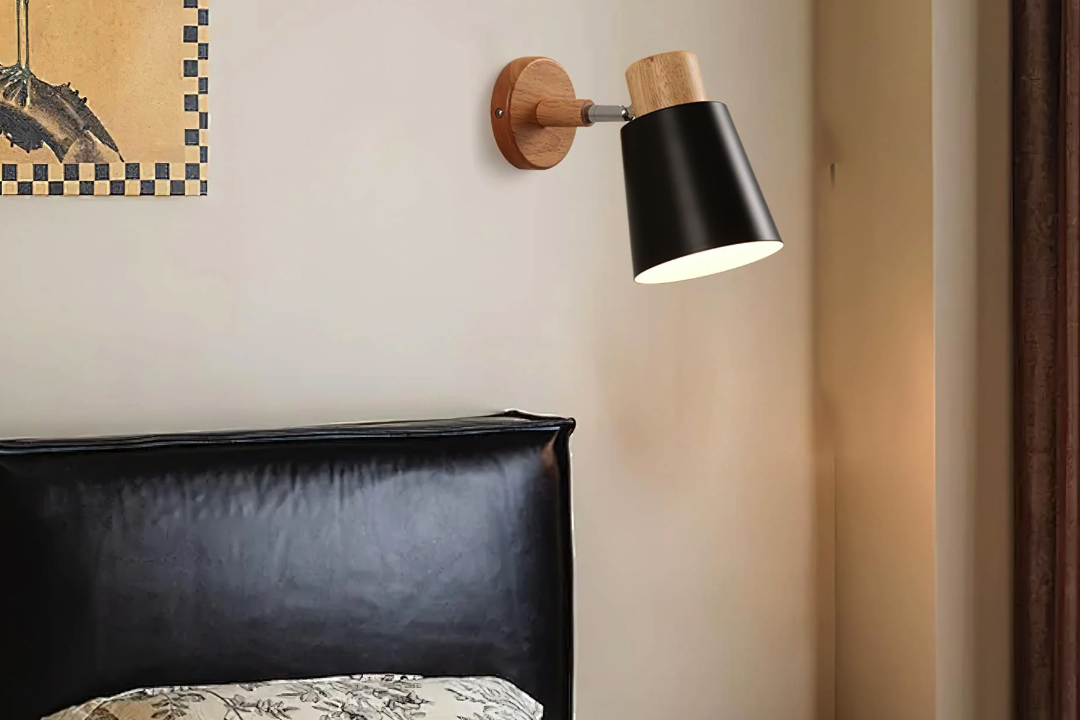
So, you’re looking to elevate your bedside, and you’ve stumbled upon the idea of a Scandi oak wall lamp. Good call! In a nutshell, these lamps offer a fantastic blend of style and practicality, freeing up precious bedside table space while adding a touch of minimalistic warmth that Scandinavian design is known for. They’re a smart choice for anyone wanting a clean, uncluttered, and inviting bedroom aesthetic.
Why Ditch the Table Lamp?
Let’s be honest, bedside tables can get cluttered pretty quickly. Your phone, a book, a glass of water, maybe some hand cream… throw in a traditional lamp Zeveau, and suddenly you’re playing Jenga with your essentials. A wall-mounted lamp eliminates this problem entirely. It’s about reclaiming that surface area for things you actually need right at hand, not just for lighting.
The Power of Scandi Design
Scandinavian design isn’t just a trend; it’s a philosophy. It’s all about functionality, simplicity, and natural materials, aiming to create spaces that are calm, inviting, and truly livable. An oak wall lamp perfectly embodies this. The warmth of the wood, coupled with clean lines, bypasses anything overly ornate or flashy, focusing instead on understated elegance that truly stands the test of time.
Picking the right lamp isn’t rocket science, but a few considerations can make all the difference in how it functions and looks in your space.
Understanding the Oak
When we talk about oak, it’s worth noting the variety. Each type brings a slightly different feel and finish to your lamp.
Solid Oak vs. Oak Veneer
- Solid Oak: This is the real deal – a lamp crafted entirely from genuine oak wood. It offers unparalleled durability, a unique grain pattern in every piece, and can be sanded or refinished over time if scratched or desired. It’s generally heavier and often comes with a higher price tag, but it’s an investment the quality and longevity of which speak for themselves. You’ll feel the substance when you touch it.
- Oak Veneer: This involves thin slices of real oak wood glued onto a less expensive core material, like MDF or plywood. It’s a more budget-friendly option, lighter in weight, and still gives you the aesthetic of oak. The grain patterns can be more uniform, as they are often carefully selected. While still durable, it won’t have the same robust feel or longevity for heavy use as solid oak. For a wall lamp, where it’s not being constantly handled, veneer can be a perfectly good and attractive option, especially if budget is a main concern.
Finish Matters
The finish applied to the oak can dramatically alter its appearance, even if it’s the exact same wood.
- Natural/Untreated: Some lamps might boast an untreated or very lightly oiled finish. This really lets the natural beauty and texture of the oak shine through. It can feel more raw and organic. However, it’s more susceptible to stains and moisture, so regular maintenance (like oiling) might be needed to keep it looking its best.
- Oiled: An oiled finish penetrates the wood, enhancing its natural grain and giving it a soft, matte lustre. It protects the wood while still allowing it to breathe and feel tactile. It’s relatively easy to repair minor scratches or re-oil if needed to refresh the look over time. This is a very common and popular choice for Scandi designs.
- Lacquered/Varnished: A lacquered or varnished finish creates a protective layer on top of the wood. This can range from a matte to a high-gloss sheen. It offers excellent protection against spills and scratches, making it very durable and easy to clean. However, it can sometimes make the wood feel less natural and more “sealed,” potentially obscuring some of the finer grain details. For a modern take, a matte lacquer can still feel refined and understated.
- Stained: While less common for the “natural” Scandi look, some oak lamps might be stained to achieve a different wood tone – perhaps a darker walnut look or a lighter, more bleached aesthetic. If it’s still clearly labelled as oak, the unique grain structure will typically still be visible underneath the stain.
Functionality and Features to Consider
Beyond just aesthetics, a good bedside lamp needs to perform its job well. Think about how you’ll actually be using it.
Placement and Reach
Consider where the lamp will sit relative to your bed. You want it easily accessible for turning on/off or adjusting, without having to stretch or get out of bed.
Swivel and Articulation
A fixed lamp might look sleek, but for reading, adjustability is key. Many Scandi oak wall lamps feature:
- Swivel Arms: These allow you to swing the lamp arm horizontally, positioning the light exactly where you need it for reading, then swinging it back out of the way when you’re done. Look for smooth, stable mechanisms.
- Adjustable Heads: The lamp head itself might be able to tilt or rotate. This is great for directing a focused beam of light onto your book or towards a specific area without changing the arm’s position. Some designs offer a ball joint for full flexibility.
- Accordion/Scissor Arms: Though less common for a purely “Scandi” aesthetic (which tends to favour cleaner lines), these extend and retract, offering significant reach. If you have a very wide bed or varying needs, this could be an option. However, they can sometimes feel a bit bulkier.
Corded vs. Hardwired
This is a practical decision based on your existing electrical setup and your comfort with DIY.
- Corded (Plug-in): These lamps come with a cord and a standard plug. They are incredibly easy to install – just screw the lamp to the wall and plug it in. This is perfect for renters, those who prefer not to deal with electrical work, or if you simply don’t have existing wiring in the ideal spot. The downside is that you will have a visible cord running down the wall, which some people find less aesthetically pleasing. This can often be tidied with cord covers or carefully concealed behind furniture.
- Hardwired: Hardwired lamps connect directly into your home’s electrical system, much like a ceiling light. This creates a very clean, seamless look with no visible cords. However, it requires an existing electrical box in the wall, professional installation (unless you’re very confident with electrical work), and is not easily moved once installed. If you’re building or renovating, this is the ideal choice for a polished finish.
Integrated Switches and Dimmers
How you turn the lamp on and off, and if you can adjust its brightness, significantly impacts its usability.
On/Off Switch Location
- On the Lamp Base: Many wall lamps have a switch integrated directly into their base or fixture itself. This is convenient as it’s right where your hand goes. Styles vary from a simple toggle to a push button or a rotary knob.
- On the Cord: For corded lamps, the switch is often inline on the cord itself. This can sometimes be a little less convenient if the cord is concealed or runs a distance.
- Wall Switch: If hardwired, the lamp is typically controlled by a wall switch (the same one that might control your overhead light), or a dedicated switch for the lamp. This provides the cleanest look.
Dimming Capabilities
- Integrated Dimmer: Some lamps come with a built-in dimmer, often a rotary knob or touch-sensitive area. This is fantastic for bedside use, allowing you to go from bright reading light to a soft nightlight glow.
- Smart Bulb Compatibility: Even if the lamp doesn’t have an integrated dimmer, you can often achieve dimming by using a smart bulb (like Philips Hue or similar). These bulbs can be controlled via an app on your phone, voice commands, or a separate smart switch, offering a lot of flexibility in brightness and even colour temperature.
Lighting Type and Bulb Choice
The bulb you choose has a huge impact on the ambiance and functionality of your bedside lamp.
The Right Bulb for the Job
Most modern lamps are designed for LED bulbs. These are the undisputed champions for energy efficiency and longevity.
Wattage Equivalence (Brightness)
When buying LED bulbs, you’ll often see “wattage equivalent” (e.g., “60W equivalent”). This tells you roughly how bright it is compared to an old incandescent bulb. For bedside reading, something in the 40-60W equivalent range (which usually means 5-9 actual LED watts) is generally ideal. You want enough light to read comfortably without straining your eyes, but not so bright that it feels harsh.
Colour Temperature (Warmth)
This is measured in Kelvin (K) and significantly affects the mood of your room.
- Warm White (2700K – 3000K): This is the go-to for bedrooms. It emits a soft, yellowish glow that mimics traditional incandescent bulbs. It promotes relaxation and a cozy atmosphere – perfect for winding down before sleep. Avoid anything too much higher than 3000K for bedside use.
- Cool White (3500K – 4500K): This is brighter and more neutral, good for task lighting in kitchens or offices, but generally too stimulating for a bedroom.
- Daylight (5000K – 6500K): Very bright and blueish, excellent for highly detailed work or spaces where you need to be very alert, but definitely not for a relaxing bedroom environment.
Smart Bulbs
As mentioned before, smart bulbs offer incredible versatility. You can often adjust brightness and colour temperature from an app, giving you ultimate control over your bedside lighting without needing extra hardware on the lamp itself. They can also be integrated into smart home routines.
Directional vs. Diffused Light
Think about how you want the light to spread from your lamp.
- Directional (Spotlight): Many Scandi wall lamps are designed with a shade that directs light downwards or in a specific beam. This is excellent for reading, as it focuses the light onto your book without disturbing a partner sleeping next to you. It creates a defined pool of light.
- Diffused (Ambient): Some lamps might have a more open shade or a frosted diffuser that spreads light more broadly. This is better for general ambient light in the room rather than focused task lighting, but you’d still want to choose a bulb with a lower lumen output for a softer glow around the bedside. Often, a bedside lamp offers a mix – a downward focus for reading, with some ambient spill around the shade itself.
Installation and Maintenance
Getting your lamp up and keeping it looking good doesn’t have to be a chore.
Mounting the Lamp
Even if you’re not an expert DIYer, most wall lamps are designed for relatively straightforward installation.
Tools You’ll Need
- Drill: For pilot holes and mounting screws.
- Screwdriver: To secure the fixture.
- Tape Measure: To ensure even height and placement.
- Level: Crucial for making sure your lamp isn’t crooked.
- Pencil: For marking drill points.
- Optional: Stud Finder: If you want to mount into a wall stud for maximum security (though often wall anchors are sufficient for lighter lamps).
Step-by-Step (General Guide)
- Mark Placement: Hold the lamp fixture against the wall at your desired height and mark the screw holes with a pencil. Make sure it’s level.
- Drill Pilot Holes: Use the appropriate drill bit size for your screws or wall anchors.
- Insert Wall Anchors: If not drilling into a stud, insert the plastic wall anchors flush with the wall.
- Attach Mounting Plate/Fixture: Screw the lamp’s mounting plate or the fixture itself onto the wall.
- Connect Wiring (Hardwired only): If hardwired, connect the live, neutral, and ground wires according to the manufacturer’s instructions. Always turn off power at the circuit breaker first! If in doubt, call an electrician.
- Secure Lamp Shade/Head: Attach any remaining parts like the lamp shade or adjustable head.
- Insert Bulb and Test: Screw in your chosen bulb and test the lamp.
Cleaning and Care
Oak is a relatively durable wood, but a little TLC will keep your lamp looking pristine for years.
Regular Dusting
- Use a soft, dry cloth or a microfiber duster to remove dust from both the oak and any metal components of the lamp. Regular dusting prevents buildup and keeps the lamp looking fresh.
Spot Cleaning
- For smudges or light marks on the oak, slightly dampen a soft cloth with plain water (avoid harsh cleaning chemicals). Gently wipe the area, then immediately dry it with a clean, dry cloth to prevent water marks.
- If your lamp has an oiled finish, you might consider using a wood-specific cleaner that’s compatible with oiled surfaces, but test in an inconspicuous area first.
Avoiding Damage
- Moisture: Keep the lamp away from excessive humidity or direct contact with liquids to prevent water damage to the wood.
- Direct Sunlight: Prolonged exposure to direct sunlight can cause wood to fade or discolour over time.
- Harsh Cleaners: Avoid abrasive cleaners, furniture polish with silicone, or chemicals, as these can strip the finish or damage the wood.
Styling Your Bedroom with Your New Lamp
A Scandi oak wall lamp is more than just a light source; it’s a design element. Here’s how to make it sing in your space.
Complementary Materials and Textures
The beauty of Scandi design is its ability to blend seamlessly with other natural elements.
Textiles
- Linen: Linen duvet covers, throws, and curtains provide a soft, lived-in feel that pairs beautifully with the natural oak. Its slightly crinkled texture adds interest without being busy.
- Wool/Knits: Chunky knit throws or textured wool rugs bring warmth and softness, creating a cozy counterpoint to the clean lines of the lamp.
- Cotton: High-quality cotton bedding in neutral tones (whites, grays, muted blues) perfectly complements the understated elegance of oak.
Other Woods
- You don’t need everything to be oak. Lighter woods like pine, birch, or even a contrasting darker wood can work well. The key is to ensure the wood tones complement each other rather than clash. For instance, a light oak lamp with a similarly light pine dresser creates a cohesive, airy feel.
Metals
- Matte Black: This is a classic pairing with oak in Scandi design. The stark contrast of matte black accents (perhaps in other hardware, a picture frame, or a small decorative object) provides a modern edge without detracting from the natural wood.
- Brushed Brass/Gold: For a touch more warmth and understated luxury, brushed brass or dull gold elements can elevate the look, adding a subtle sparkle. Avoid anything too shiny or polished if you’re aiming for authentic Scandi style.
- White: Simple white metal components on the lamp itself (like the shade interior or a mounting bracket) are common and keep the overall aesthetic light and fresh.
Colour Palette Harmony
Scandi design leans heavily on a calm, neutral palette, allowing the textures and natural materials to take centre stage.
Neutrals
- Whites: Crisp whites, off-whites, and warm creams form the foundation of a Scandi bedroom. They make the space feel bright, airy, and expansive, and highlight the oak’s warmth.
- Greys: Soft greys, from light silver to charcoal, offer a sophisticated backdrop. They can add depth and warmth without being overpowering.
- Beiges/Taupes: These earthy tones connect beautifully with the natural oak, creating a serene and grounded atmosphere.
Subtle Accents
- Muted Greens: Sage, olive, or eucalyptus greens bring a connection to nature and a sense of tranquility.
- Dusty Blues: Soft, muted blues can create a calming, peaceful vibe reminiscent of the sky or sea.
- Terracotta/Warm Rust: For a subtle pop of warmth, especially with lighter oaks, a hint of terracotta or a muted rust colour can be grounding and inviting.
Creating a Cohesive Space
It’s all about intentionality. Think of your bedside area as a mini-vignette.
Minimalist Décor
- Less is More: Resist the urge to over-decorate your bedside table or the wall around the lamp. One or two thoughtfully chosen items are enough – a small ceramic vase with a single branch, a simple alarm clock, or a framed black and white photo.
- Natural Elements: Continue the theme of natural materials with small plants (snake plant, ZZ plant), a ceramic catch-all dish, or a textured coaster.
- Balanced Lighting: If you have symmetrical bedside lamps, ensure they are mounted at the same height and distance from the bed to create a sense of balance and calm. If you have just one, consider balancing the other side of the bed with a tall plant or a narrow piece of art to maintain visual equilibrium.
By bringing a Scandi oak wall lamp into your bedroom, you’re not just adding a light source; you’re investing in a piece that brings both aesthetic beauty and practical benefits. It’s a choice for timeless design, inviting warmth, and a wonderfully uncluttered bedside experience.