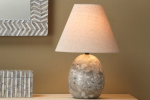
Faceted desk lamps can be a really neat addition to your gallery wall decor. They offer a unique blend of modern aesthetics and practical illumination, making them more than just a light source – they become a sculptural element that enhances the overall artistic impact of your curated display. Instead of just a traditional picture light, a faceted desk lamp brings a different kind of visual interest and can highlight specific pieces or add an ambient glow.
Why Faceted Lamps Stand Out
You might be wondering, why specifically faceted desk lamps? Well, it comes down to their design. Unlike a smooth, uniform lamp shade, faceted designs feature multiple flat surfaces that create interesting angles and reflections. This geometric quality is what makes them so appealing for contemporary and even some eclectic gallery wall setups.
Geometric Allure
The sharp lines and varied planes of a faceted lamp catch the light in a way that flat surfaces don’t. This creates a dynamic visual effect, almost like a piece of abstract sculpture. When placed near art, these reflections and shadows can interact with the artwork, adding another layer of depth and intrigue. It’s not just about turning on a light; it’s about how that light looks even when it’s off.
Modern & Minimalist Appeal
Faceted designs often align perfectly with modern and minimalist decor styles. Their clean lines and often monochromatic finishes (think black, white, brass, or chrome) complement the stripped-down aesthetic of these looks. If your gallery wall features contemporary art, abstract prints, or black and white photography, a faceted lamp can reinforce that modern vibe beautifully. They avoid the fussiness that some traditional lamps might bring.
Unexpected Visual Interest
A gallery wall is all about creating a captivating arrangement. Adding a faceted desk lamp introduces an unexpected element that breaks up the flat planes of frames and canvases. It’s a three-dimensional object that provides a welcome contrast and draws the eye. This can prevent your gallery wall from looking too one-dimensional or static. It’s about creating a conversation between different types of objects.
Choosing the Right Faceted Lamp for Your Wall
So, you’re on board with the idea. Now, how do you pick the right faceted lamp? It’s not just about grabbing the first one you see. A few key considerations will help you find the perfect match for your existing decor and the vibe you’re going for.
Size and Scale
This is crucial. You don’t want a massive lamp overwhelming delicate artwork, nor a tiny lamp getting lost amidst large pieces. Think about the overall scale of your gallery wall. If you have mostly small to medium-sized frames, a smaller, more understated faceted lamp will work best. For larger, more expansive walls with bigger artworks, you can go for a lamp with more presence. Hold up a rough cut-out of the lamp’s dimensions to get a feel for how it will look.
Material Matters
The material of your faceted lamp will significantly impact its aesthetic.
Metal Finishes
- Brass/Gold: Adds warmth, sophistication, and a touch of vintage glam. Great for eclectic or art deco-inspired gallery walls.
- Black/Matte Black: Offers a sleek, modern, and sometimes industrial edge. Excellent for monochrome schemes or contrasting with vibrant art.
- Chrome/Silver: Delivers a very contemporary, reflective look. Ideal for minimalist or futuristic aesthetics.
- Copper: Provides a warm, reddish-brown hue that can be both modern and rustic, depending on the other elements.
Ceramic and Other Options
While less common for faceted designs, you might find ceramic or even certain resin-based lamps with a faceted texture. These can offer a more artisanal or handcrafted feel. Consider how the material interacts with the materials in your existing frames and artwork.
Light Direction and Output
Remember, it’s still a lamp! How it illuminates your wall is important.
Task Lighting vs. Accent Lighting
- Task Lighting: If you intend for the lamp to highlight a specific piece of art, look for a lamp with a more focused beam or an adjustable head. This allows you to direct light precisely where you want it.
- Accent Lighting: For a more general ambient glow that contributes to the overall mood, a lamp with a broader light distribution or an opaque shade that diffuses light might be better.
Bulb Type and Warmth
Consider the bulb type. LED bulbs are energy-efficient and come in various color temperatures. A warmer light (around 2700K-3000K) often feels cozier and more inviting, while cooler light (3500K-4000K) can feel more modern and crisp. The color temperature can impact how your artwork appears, so experiment if possible.
Integrating Faceted Lamps into Your Gallery Wall Design
This is where the magic happens! Simply placing a lamp on a desk in front of a gallery wall isn’t enough. We’re aiming for true integration, making the lamp an intentional part of the display.
Strategic Placement
Think about where the lamp will sit relative to your artwork.
On a Floating Shelf
This is a popular and effective method. Install a small floating shelf within your gallery wall arrangement, perhaps beneath a cluster of frames. Place the faceted desk lamp on this shelf. This elevates the lamp, making it a distinct sculptural element within the wall composition. It also keeps your actual desk clear if you’re using this setup for a home office.
On a Console Table or Sideboard
If your gallery wall extends above a piece of furniture like a console table or a sideboard, placing the faceted lamp directly on this surface can be incredibly stylish. This creates a natural anchor point for the wall display and grounds the entire arrangement. The height of the furniture piece often works well to bring the lamp into the visual field of the artwork.
As a Grounded Element
For larger, floor-to-ceiling gallery walls, a faceted floor lamp could even be an option, acting as a grounding element. While this article focuses on desk lamps, the principle of using a faceted form to break up the wall surface still applies. A smaller, well-placed desk lamp on a low, narrow table could achieve a similar effect.
Creating Visual Balance
A gallery wall thrives on balance. Your faceted lamp needs to contribute to this.
Weight and Negative Space
Consider the visual weight of the lamp. A dark, chunky lamp has more visual weight than a light, airy one. Balance this with the surrounding artwork. If you have a visually heavy lamp, ensure there’s enough “negative space” around it, or balance it with larger pieces of art nearby. Don’t let it create a lopsided feeling.
Grouping with Artwork
Instead of viewing the lamp as separate, try grouping it with a few pieces of art. For example, place the lamp on a shelf with a small framed print to its left and a leaning postcard or small sculpture to its right. This creates a mini-vignette within the larger gallery wall.
Color and Finish Coordination
The lamp’s color and finish should ideally complement your existing gallery wall palette.
Harmonious Blends
If your gallery wall features a lot of warm tones (golds, browns, creams), a brass or copper faceted lamp would blend in harmoniously. If you have cool tones (blues, grays, whites), a chrome or black lamp might be a better fit.
Deliberate Contrasts
Sometimes, a deliberate contrast can be very effective. A matte black faceted lamp against a wall of vibrant, colorful art can really pop and make both the lamp and the art stand out. The key is that the contrast feels intentional, not accidental.
Beyond the Desk: Practical Considerations for Wall Use
While they’re called “desk” lamps, we’re repurposing them for wall decor. This brings up a few practical things to keep in mind.
Cord Management
This is often the biggest hurdle. Visible cords can quickly detract from an otherwise stylish display.
Hiding the Cord
- Behind Furniture: If your lamp is on a console or sideboard, you can often snake the cord behind the furniture and down to an outlet.
- Cord Covers: For lamps on floating shelves, discreet cord covers that match your wall color can be very effective. These can be painted to virtually disappear.
- Within Wall: For a truly seamless look, you might consider having an electrician install an outlet behind the floating shelf or within the wall itself, but this is a more involved project.
- Creative Concealment: Sometimes, you can use other decorative elements, like a tall plant or a stack of books, to strategically hide a portion of the cord.
Stability and Safety
Ensure the lamp is stable wherever it’s placed.
Secure Shelving
If using a floating shelf, make sure it’s securely anchored to the wall, especially if the lamp has a bit of weight to it. You don’t want any wobbles or, worse, a fall.
Avoiding Overcrowding
Don’t overcrowd the shelf or surface where the lamp is placed. Give the lamp and any adjacent items enough room so they don’t get accidentally knocked over. If the lamp is top-heavy, consider adding a non-slip pad underneath its base.
Accessibility for Operation
Think about how you’ll turn the lamp on and off.
Switch Location
Many desk lamps have switches on the cord or on the base. Ensure the switch is easily accessible without having to move artwork or awkwardly reach behind things. Lamps with dimmer switches can add an extra layer of ambiance control.
Smart Plugs
For convenience, especially if the switch is hard to reach, consider using a smart plug. This allows you to turn the lamp on and off with a voice command or through an app, making it incredibly easy to integrate into your daily routine.
Inspiring Examples and Stylistic Pairings
Let’s get a little more concrete with some ideas for different gallery wall styles.
The Modern Minimalist Wall
Imagine a gallery wall with a few large, unframed canvases featuring abstract geometric prints in black, white, and gray. A sleek, matte black faceted desk lamp placed on a slim white floating shelf, slightly off-center, would be perfect. Its sharp lines would echo the geometric art, and the black finish would provide a stark, elegant contrast. The light would cast interesting shadows, enhancing the minimalist aesthetic.
Eclectic Bohemian Vibe
For a gallery wall bursting with color, textures, and a mix of travel souvenirs, art prints, and textiles, a brass or copper faceted lamp could add a touch of warmth and sophistication. Place it on a dark wood console table, perhaps next to a stack of vintage books or a small potted plant. The metallic facets would catch the light and add a luxurious glint without competing with the vibrant art. Its geometric form would provide an unexpected modern anchor within the bohemian mix.
Industrial Chic Display
If your gallery wall features distressed metal signs, raw wood frames, and perhaps some black and white photography of urban landscapes, a black or dark bronze faceted lamp would fit right in. Look for one with exposed bulb details or a slightly more rugged finish. Place it on a raw concrete or reclaimed wood shelf. The hard edges of the lamp would complement the industrial aesthetic beautifully, and its light could highlight specific textural elements in your art.
Artistic and Sculptural Arrangement
Consider a gallery wall where the art itself has a sculptural quality – perhaps some small 3D pieces, textured canvases, or framed textiles. A faceted lamp in a unique color (like a deep forest green or a muted terracotta, if you can find one) or an interesting material (like a textured ceramic) could become a focal point. Place it on a sturdy, art-worthy plinth or a small, elegant side table nestled amongst the art. The lamp itself becomes a piece of art, interacting with the other sculptural elements.
The Refined Traditional Twist
Even in a more traditional setting, a faceted lamp can work if chosen carefully. Imagine a gallery wall with classic botanical prints, framed architectural drawings, and perhaps some antique maps, all in dark wood or gilded frames. A polished brass faceted lamp with a slightly more classical silhouette (though still faceted) could sit on an antique writing desk beneath a portion of the wall. It offers a fresh, updated take on traditional lighting while still respecting the classic aesthetic. The facets would introduce a subtle, elegant shimmer.
Ultimately, integrating a faceted desk lamp into your gallery wall decor is about creative problem-solving and seeing the lamp as an active participant in your artistic display, not just a passive light source. By considering size, material, placement, and light quality, you can create a truly stylish and illuminated space.